CMSC 2026
Workshop · 薪傳 · 新苗 № 2026

Computational Mathematics & Scientific Computing for Young Researchers

二〇二六年 ・ 計算數學薪傳及新苗研討會

Dates 13 — 14 August 2026
Venue S102 Lecture Hall
Dept. of Mathematics, NTNU
Scroll
01

Aim & Scope

This workshop will provide researchers with an opportunity to share their work and interests in computational mathematics and related fields.

We invite senior researchers to share their experiences and insights on new methodologies and technologies. In particular, we hope to foster collaboration and meaningful interaction between senior and junior researchers.

Numerical Analysis Scientific Computing Computational Geometry PDE Methods Optimization Data-Driven Modeling Spectral Methods Linear Algebra
02

Invited Speakers

  1. i.

    Ray-Bing Chen

    National Tsing Hua University

  2. ii.

    Shih-Hsin Chen

    National Chung Hsing University

  3. iii.

    Nai-Chu Huang

    National University of Kaohsiung

  4. iv.

    Yen-Chang Huang

    National Yang Ming Chiao Tung University

  5. v.

    Chin-Lung Li

    National Tsing Hua University

  6. vi.

    Jephian C.-H. Lin

    National Yang Ming Chiao Tung University

  7. vii.

    Jia-Wei Lin

    Tunghai University

  8. viii.

    Yuan-Hsun Lo

    National Chengchi University

  9. ix.

    Min-Jhe Lu

    National Tsing Hua University

  10. x.

    Cheng-Fang Su

    National Yang Ming Chiao Tung University

  11. xi.

    Chin-Tien Wu

    National Yang Ming Chiao Tung University

  12. xii.

    Chun-Cheng Yeh

    National Kaohsiung Normal University

  13. xiii.

    Hsing-Yuan Yeh

    National Taiwan University

  14. xiv.

    Chien-Chang Yen

    Fu Jen Catholic University

03

Program

Day 01

Thursday, August 13, 2026

Place: NTNU

  • 09:20 - 09:40Registration
  • 09:40 - 09:50Opening
  • 09:50 - 10:20Chien-Chang YenA Semi-Analytical Method for the Poisson Equations on Unbounded Domains with BoundariesAbstract
  • 10:20 - 10:50Jephian C.-H. LinInverse Fiedler Vector Problem of a GraphAbstract
  • 10:50 - 11:00Tea Break
  • 11:00 - 11:30Chin-Tien WuSDRE Control in IAG, IBVS and Bipedal RobotAbstract
  • 11:30 - 12:00Min-Jhe Lu
  • 12:00 - 13:30Lunch Break
  • 13:30 - 14:00Yuan-Hsun LoAge of Information for Periodic Status Updates Under Sequence-Based SchedulingAbstract
  • 14:00 - 14:30Chun-Cheng Yeh
  • 14:30 - 14:40Tea Break
  • 14:40 - 15:10Nai-Chu HuangA Characterization of Positive Entropy of Markov Tree-ShiftsAbstract
  • 15:10 - 15:40Yen-Chang HuangSlicing Support Functions, Recovery Formulas, and Monge-Ampère Structures in Convex GeometryAbstract
  • 15:40 - 16:00Group Photo and Tea Break
  • 16:00 - 16:30Chin-Lung LiGeneralized Debye-Hückel Theory Based on the Poisson-Fermi Model for Mixed-Salt and Mixed-Solvent Electrolyte SystemsAbstract
  • 16:30 - 17:00Shih-Hsin Chen
  • 18:00 - 20:00Banquet · 公館水源會館
Day 02

Friday, August 14, 2026

Place: NTNU

  • 09:30 - 10:00Cheng-Fang Su
  • 10:00 - 10:30Ray-Bing ChenMulti-Objective Bayesian Optimization of CPU Cooling Design with Mixed Variables using Category Tree Gaussian ProcessAbstract
  • 10:30 - 10:50Tea Break
  • 10:50 - 11:20Jia-Wei Lin
  • 11:20 - 11:50Hsing-Yuan YehScalable Spectral Methods for Sensor Fusion via Landmark Alternating DiffusionAbstract
  • 11:50 - 13:00Closing and Free Discussion
04

Abstracts

Talk 01 Thursday 09:50 - 10:20

A Semi-Analytical Method for the Poisson Equations on Unbounded Domains with Boundaries

Chien-Chang Yen, Fu Jen Catholic University

The Poisson equations on a finite region have been well studied in historical literature. In this talk, we consider domains with boundaries that are unbounded, such as a half plane or the quarter plane. The proposed method, based on the integral form, is free of artificial boundaries under the assumption that the density has compact supports. Moreover, the order of accuracy is induced from the order of Taylor expansion of the density, and fast nearly linear computational complexity can be obtained if uniform grid discretization is used. Finally, the numerical comparison study shows that this method outperforms the finite difference approach.

Co-authors: Tzu-Ching Liu, Zhi-Yi Liu, Feng-Nan Hwang.

Talk 02 Thursday 10:20 - 10:50

Inverse Fiedler Vector Problem of a Graph

Jephian C.-H. Lin, National Yang Ming Chiao Tung University

Given a graph and one of its weighted Laplacian matrices, a Fiedler vector is an eigenvector with respect to the second smallest eigenvalue. The Fiedler vectors have been used widely for graph partitioning, graph drawing, spectral clustering, and finding the characteristic set. For a given tree, we characterize all possible Fiedler vectors among its weighted Laplacian matrices. As an application, the characteristic set can be anywhere on a tree, except for the set containing a single leaf.

This is a joint work with Mahsa N Shirazi.

Talk 03 Thursday 11:00 - 11:30

SDRE Control in IAG, IBVS and Bipedal Robot

Chin-Tien Wu, National Yang Ming Chiao Tung University

This talk presents an accelerated nonlinear optimal control framework based on the State-Dependent Riccati Equation (SDRE) for three critical robotic applications: Impact Angle Guidance (IAG), Image-Based Visual Servoing (IBVS) for quadrotors, and bipedal leg control. For IAG and IBVS, achieving finite-time control under noisy perturbations is practically essential. We propose the Mi-SDRE-DKF framework, which integrates SDRE control with a Discrete Kalman Filter by employing the Structure-Preserving Doubling Algorithm (SDA) naturally combined with binary power iteration. This synergistic approach significantly accelerates the computation of Riccati and Lyapunov equations, enabling its use in real-time control. The SDA algorithm adapts high hardware efficiency, maintaining a 641 Hz control frequency on FPGA.

In parallel, a suspended bipedal robot is utilized as a test bench for exoskeleton devices, where high reliability and repeatability of human lower limb gaits are mandatory. To address challenges such as motor under-actuation and model dynamics uncertainty, we implement a three-stage control strategy featuring an offline PID-LQR compensation step. Since the first and third stages of this strategy are formulated under the SDRE framework, the computational acceleration provided by SDA is also successfully extended to the bipedal system. Experimental results demonstrate high-fidelity motion reproduction with an average RMSE below 3°.

Talk 05 Thursday 13:30 - 14:00

Age of Information for Periodic Status Updates Under Sequence-Based Scheduling

Yuan-Hsun Lo, National Chengchi University

In many applications of Internet of Things, such as temperature and air pollution monitoring or traffic condition detection for autonomous driving, received information usually has a higher value when it is fresher. Age-of-information (AoI) is a newly defined performance metric to quantify the information freshness over such a wireless access networks. In this talk, we focus on AoI performance in the scenario where multiple users transmit periodically generated packets to an access point without feedback. The adopted scheme is based on protocol sequences, where each user is assigned a periodic binary sequence to schedule their transmissions. We will provide some progress on the average AoI under sequence-based scheme, including low-complexity closed-form expressions for some special cases and some properties of the sequence structure to optimize the AoI performance.

Talk 07 Thursday 14:40 - 15:10

A Characterization of Positive Entropy of Markov Tree-Shifts

Nai-Chu Huang, National University of Kaohsiung

Topological entropy is often considered as an indicator of complexity. However, there is no finitely checkable algorithm to determine the positive entropy of multidimensional shifts of finite type. Indeed, it is right recursively enumerable. In this presentation, we will present the characterization of positive entropy in Markov tree-shifts by adjacency matrices.

Talk 08 Thursday 15:10 - 15:40

Slicing Support Functions, Recovery Formulas, and Monge-Ampère Structures in Convex Geometry

Yen-Chang Huang, National Yang Ming Chiao Tung University

The support function is a fundamental tool in convex geometry, encoding the shape of a convex body through its supporting hyperplanes. In this talk, we introduce the slicing support function, a variant arising from extremal affine slices of a convex body. This function provides an alternative representation of convex geometric data and offers a lower-dimensional perspective on the classical support function.

We show that the slicing support function can be obtained from the classical support function through an infimal-convolution-type formula. This recovery structure reveals how slicing data are encoded in the original support function while reducing the dimensional complexity of the problem.

Under suitable convexity assumptions, the associated minimizer is unique almost everywhere, which leads to differentiability properties of the slicing support function. We further derive a nonlinear partial differential equation of Monge-Ampère type satisfied by the slicing support function. This equation highlights a connection between slicing geometry, curvature reconstruction, and nonlinear geometric analysis.

Talk 09 Thursday 16:00 - 16:30

Generalized Debye-Hückel Theory Based on the Poisson-Fermi Model for Mixed-Salt and Mixed-Solvent Electrolyte Systems

Chin-Lung Li, National Tsing Hua University

The concept of ion activity coefficients plays a fundamental role in describing the non-ideal behavior of electrolyte solutions, where interactions among ions and solvent molecules cause deviations from ideal solution assumptions. Accurate modeling of ion activities is therefore crucial for predicting and understanding the thermodynamic behavior of electrolyte systems. In this talk, a generalized Debye-Hückel theory is proposed for the thermodynamic modeling of ion activities in mixed-salt and mixed-solvent electrolyte solutions.

The theory is based on a molecular mean-field Poisson-Fermi model that treats ions and solvent molecules of any volume and shape with interstitial voids and takes account of ion-ion, ion-solvent, and solvent-solvent correlations, polarizability of solvent molecules and ions, and permittivity variations with ionic strength, temperature, polarizability, and location. The unique analytic solution of the electric potential can be obtained by the linearization of the fourth-order Poisson-Fermi model with some additional boundary and interface conditions in the spherically symmetric domain. The mean ionic activity coefficient is explicitly derived from the excess chemical potential of the ions in electrolyte solutions. Some numerical examples are presented to illustrate the novelty of this theory in capturing the physical properties and interactions.

Talk 12 Friday 10:00 - 10:30

Multi-Objective Bayesian Optimization of CPU Cooling Design with Mixed Variables using Category Tree Gaussian Process

Ray-Bing Chen, National Tsing Hua University

As computing power advances, optimizing CPU cooling systems has become increasingly important for maintaining reliability and thermal performance. Designing such systems often requires computationally expensive high-fidelity simulations involving both qualitative and quantitative inputs while producing multiple performance outputs, leading to a challenging mixed-input multi-objective optimization (MOO) problem. To address this challenge, we investigate surrogate modeling for multi-response computer experiments with mixed-type inputs.

Taking advantage of the Category Tree Gaussian Process (ctGP), originally developed for efficient modeling with large categorical input spaces, we propose a multi-response extension termed ctmGP. The proposed approach adaptively captures dependence structures among objectives while remaining effective across both highly correlated and weakly correlated settings. Using ctmGP, we develop surrogate-assisted multi-objective Bayesian optimization frameworks based on two acquisition criteria and sequential design strategies. Numerical experiments on synthetic benchmarks and a comprehensive CPU cooling-system case study demonstrate that the proposed methods provide effective and robust optimization performance across diverse correlation structures.

Talk 14 Friday 11:20 - 11:50

Scalable Spectral Methods for Sensor Fusion via Landmark Alternating Diffusion

Hsing-Yuan Yeh, National Taiwan University

Manifold learning aims to recover the intrinsic geometry of high-dimensional data through spectral analysis of graph operators. In this talk, I focus on scalable spectral methods for multi-sensor data and large datasets. In particular, I introduce Landmark Alternating Diffusion (LAD), a scalable spectral method for sensor fusion, which builds on the Alternating Diffusion (AD) framework to extract the common manifold structure shared by multiple observations.

By approximating the alternating diffusion process using a small set of landmark points, LAD significantly reduces computational cost while preserving the geometry captured by AD. Under standard common manifold assumptions, we establish theoretical guarantees including consistency, convergence, and finite-sample error bounds. We also demonstrate the practical effectiveness of LAD on an EEG sleep stage annotation task using multi-channel signals. Finally, I will briefly discuss how the landmark framework can be extended to Vector Diffusion Maps (VDM) for scalable analysis of directional and connection-valued data.

05

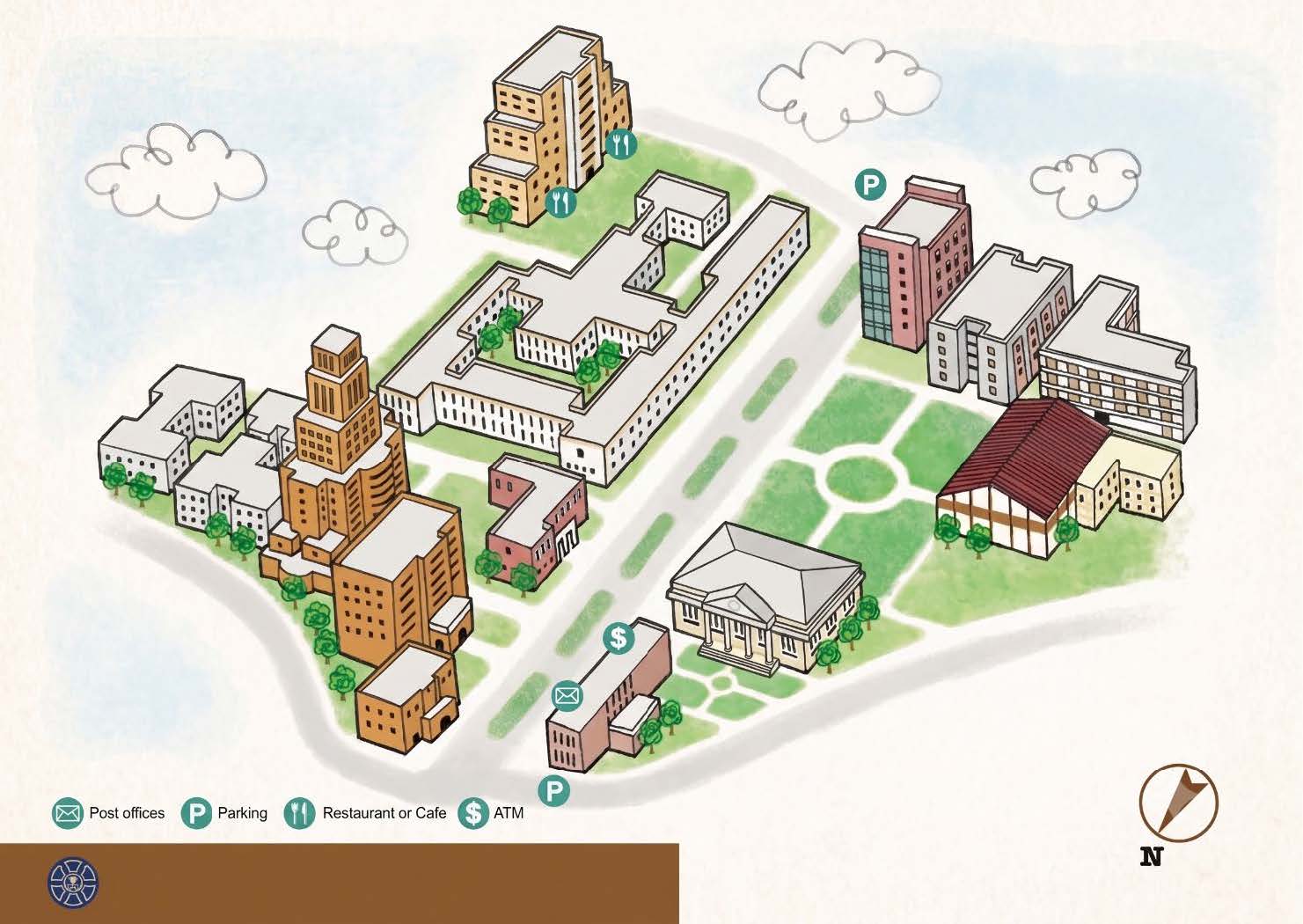
Venue

S102 Lecture Hall

Department of Mathematics
National Taiwan Normal University
No. 88, Sec. 4, Tingzhou Rd.
Wenshan District, Taipei 116, Taiwan

國立臺灣師範大學 ・ 數學系 ・ S102 演講廳
116 臺北市文山區汀州路四段 88 號

Department website ↗
06

Accommodation

The following nearby hotels are provided for participants' reference.

Please contact each hotel directly for reservations. Room rates, availability, and booking policies are subject to the hotel's latest announcements.

Gongguan

Hanns Summer Hotel 瀚寓夏天

No. 62, Sec. 3, Tingzhou Rd., Zhongzheng Dist., Taipei City 100, Taiwan

Convenient to the venue by taxi, or by local transit via the Gongguan and Wanlong area.

07

Registration

Please complete the registration form to reserve your seat and to assist us with logistical planning.

註冊費用

參加會議費用一律於會議當天現場繳交。

教師

註冊費新台幣 $2,000 元,講者與無國科會計畫者可免繳註冊費。

學生/博士後

免繳註冊費,但欲參加晚宴(公館水源會館)者請於會議現場繳交註冊費新台幣 $700 元。

Open Registration Form
08

Workshop History

歷年舉辦地點

  1. 第1屆 (2015) 國立交通大學
  2. 第2屆 (2016) 國立交通大學
  3. 第3屆 (2019) 國立交通大學
  4. 第4屆 (2020) 國立高雄大學
  5. 第5屆 (2021) 國立陽明交通大學
  6. 第6屆 (2022) 國立成功大學
  7. 第7屆 (2023) 國立東海大學
  8. 第8屆 (2024) 國立中山大學
  9. 第9屆 (2025) 國立陽明交通大學
  10. 第10屆 (2026) 國立臺灣師範大學
09

Organizing Committee

Organized by